USSSA Team Count Methods

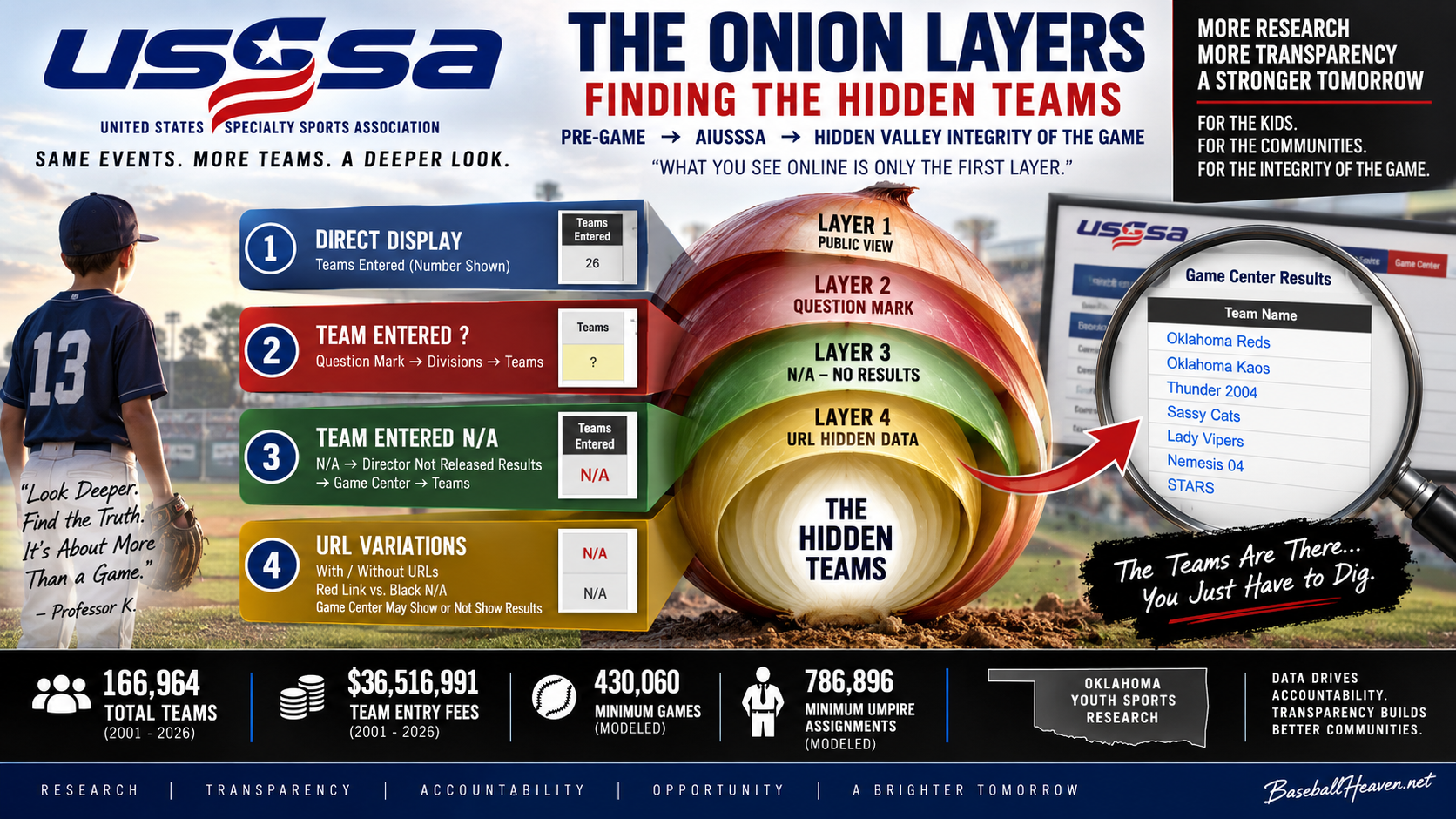
USSSA Teams Entered — Hidden Valley research onion layers used to identify teams deeper in public event records
Hidden Valley Integrity of the Game Research

USSSA Team Count Methods: How the Onion Layers Reveal the Event Record

A public methodology page documenting how the research evolved from a limited season-by-season pre-game review, to AIUSSSA URL reconstruction, to the Hidden Valley dataset — where team counts may require two, three, or four layers of navigation before the underlying teams and games become visible.

Pre-Game → AIUSSSA → Hidden Valley Baseball + Softball 2001–2026 Research Window Primary Web Evidence First
Why this page matters

A “?” or “N/A” on a public event screen does not necessarily mean no teams participated. The research now documents four repeatable pathways for locating team information, including cases where teams appear only after opening division links, “Who’s Coming,” Game Center, or Results screens.

0
Current Working Team Entry Fees
Baseball + softball in the updated research transcript.
0
Teams Identified
Current working total after the newly discovered layer.
0
Minimum Games
Research-derived minimum game count tied to identified event records.
0
Minimum Umpire Assignments
Modeled from the research game structure.
Research evolution

Three Phases — Increasing Depth, Increasing Precision

The central change was not merely “more data.” It was learning where USSSA’s public website stores the same event record in different layers, and then revisiting older assumptions when a deeper layer produced a factual team count.

Phase 01

Pre-Game Research

The original spreadsheet relied primarily on the seasons that could be selected directly in the USSSA event-search interface. At that stage, the visible filter window was limited and events with missing team counts sometimes required conservative assumptions.

Visible filter years first
Phase 02

AIUSSSA

After recognizing recurring URL structures, the research manually reconstructed older season URLs and expanded the historical review backward through 2001. Question-mark events were re-examined rather than treated as empty by default.

URL reconstruction + historical recovery
Phase 03

Hidden Valley Integrity of the Game

The current phase preserves direct URLs, division-level evidence and deeper event-navigation paths. Newly discovered “onion layers” can replace modeled team counts with factual team names and observable game records when those records are recoverable.

Evidence chain + repeatable navigation
Season-filter evidence

The Search Interface Changed Over Time

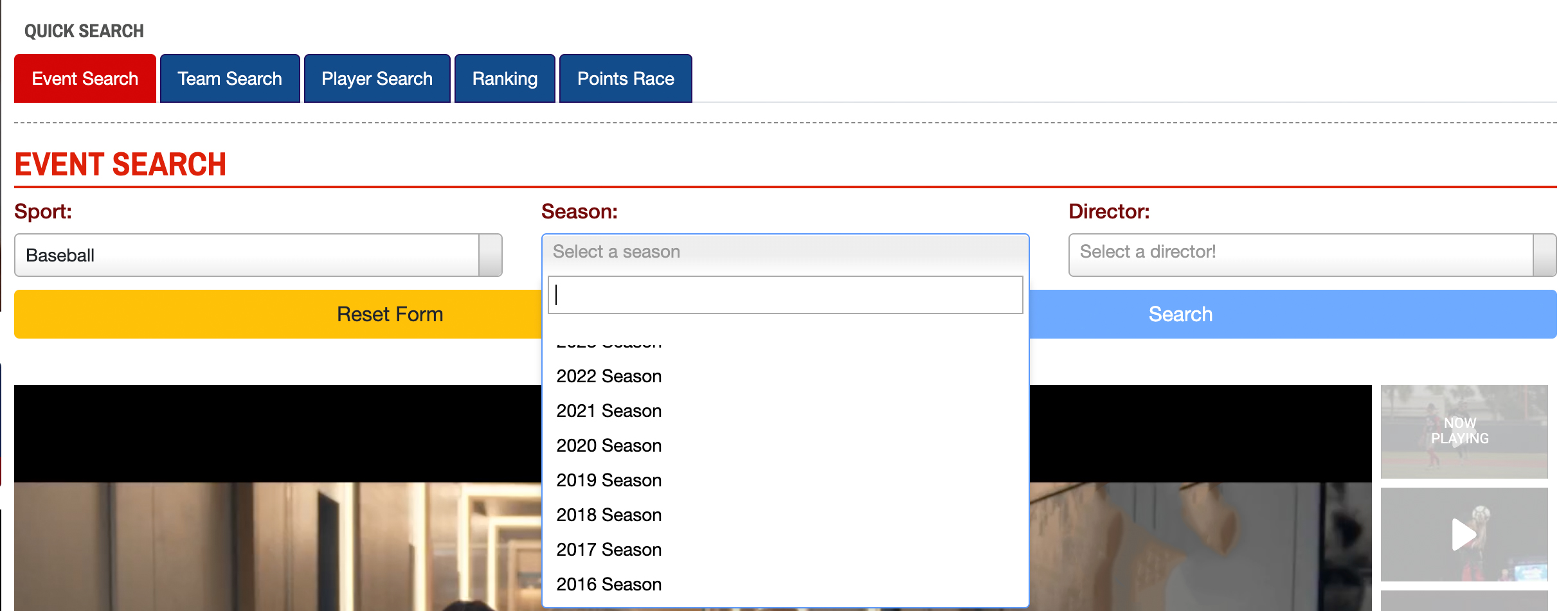
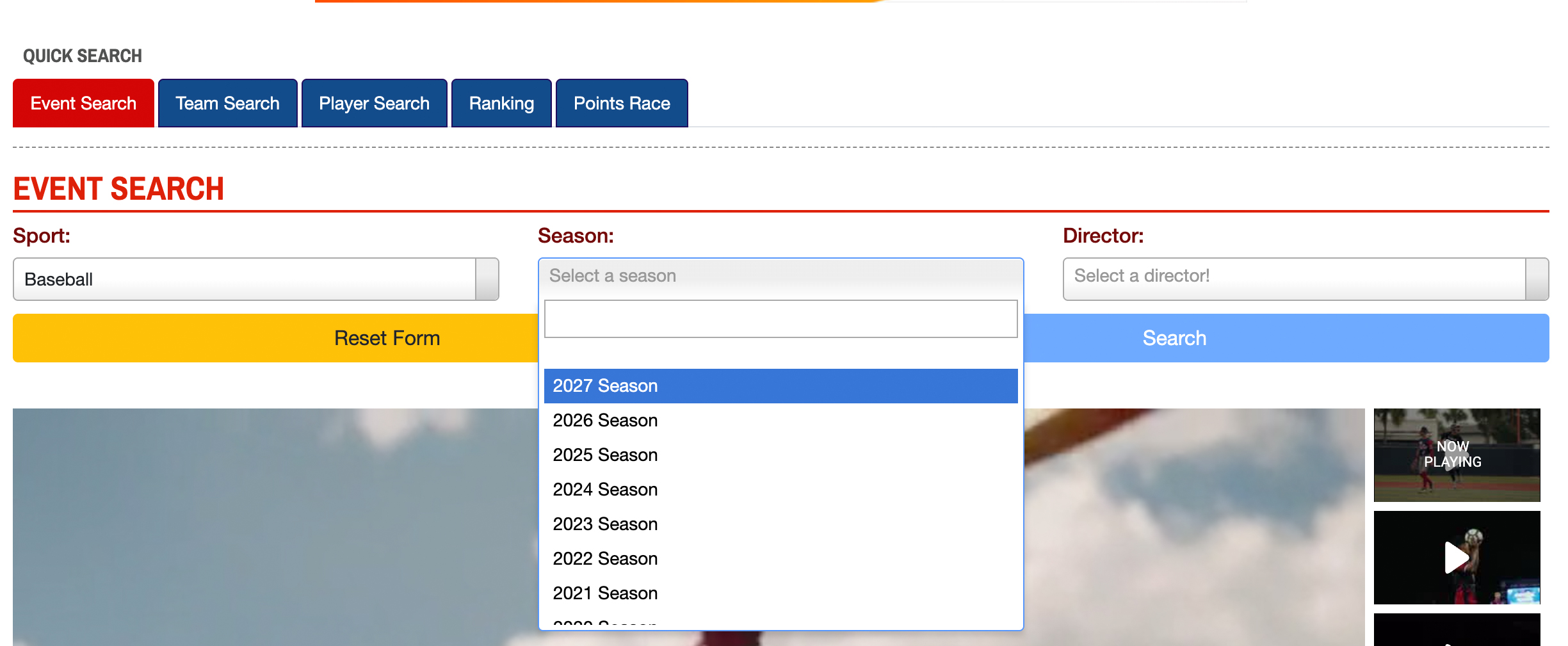
The two screenshots document the research problem: the public season selector did not always expose the full historical period being studied. The later display shows an expanded selectable range, while the methodology also relied on recurring URL patterns to recover older seasons.

USSSA event search season filter displaying earlier visible seasons
Earlier season-filter displayVisible season selections were limited, illustrating why the original Pre-Game research did not begin as a complete 2001-forward dataset.
USSSA event search season filter displaying seasons through 2027
Later season-filter displayThe interface later exposed newer seasons through 2027. The historical dataset, however, also depends on direct URL reconstruction for 2001–2015.
The four observable pathways

Four Team-Count Methods Found in the Public Event Architecture

These are not four different formulas. They are four different navigation patterns that can lead to the factual number of teams associated with a USSSA event. The research records which path was required and preserves the evidence used.

Method01

Standard Display — Team Count Is Visible

The simplest event record shows a numerical team count on the annual event listing or division page. The event can then be opened to confirm divisions, teams and — where available — Game Center results. This is the baseline pathway against which the deeper onion layers are compared.

Annual Event SearchVisible Team CountDivision PageTeam List / Results
Teams entered visible team count
Teams Entered — visible numerical count on the event record.
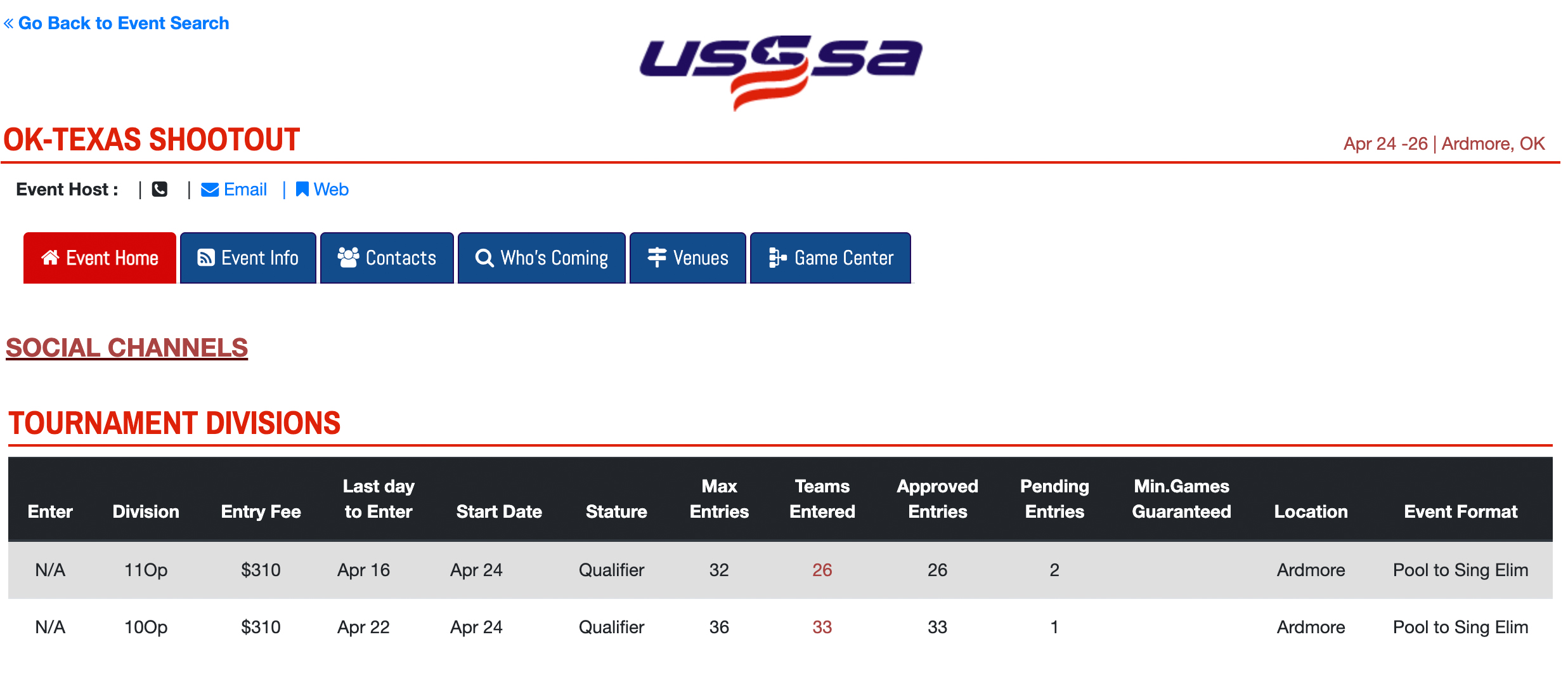
Tournament divisions and teams entered
Division detail — entry fee, division and teams-entered fields can be cross-checked.
Method02

Question-Mark Event — Teams Exist Behind the “?”

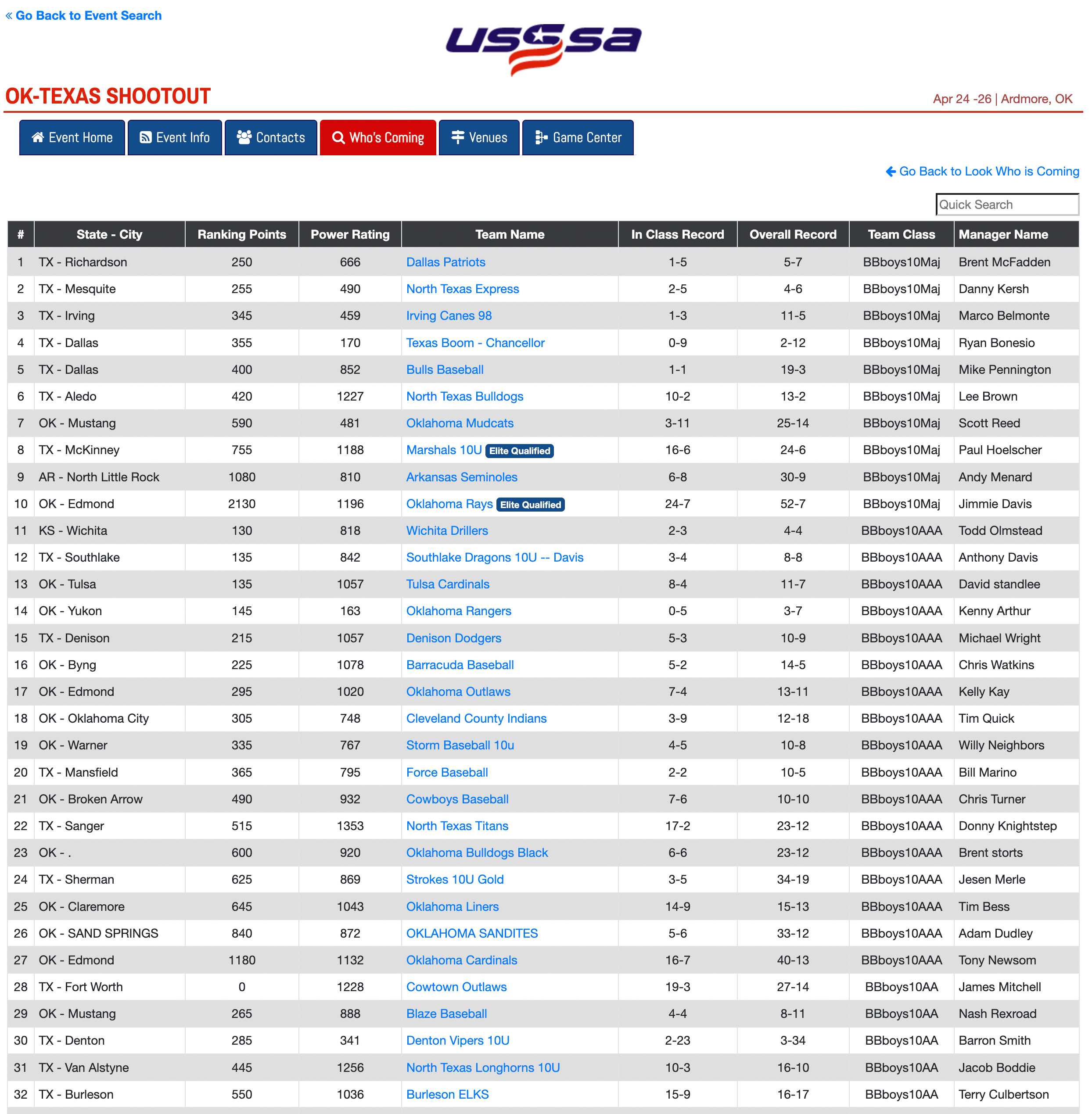
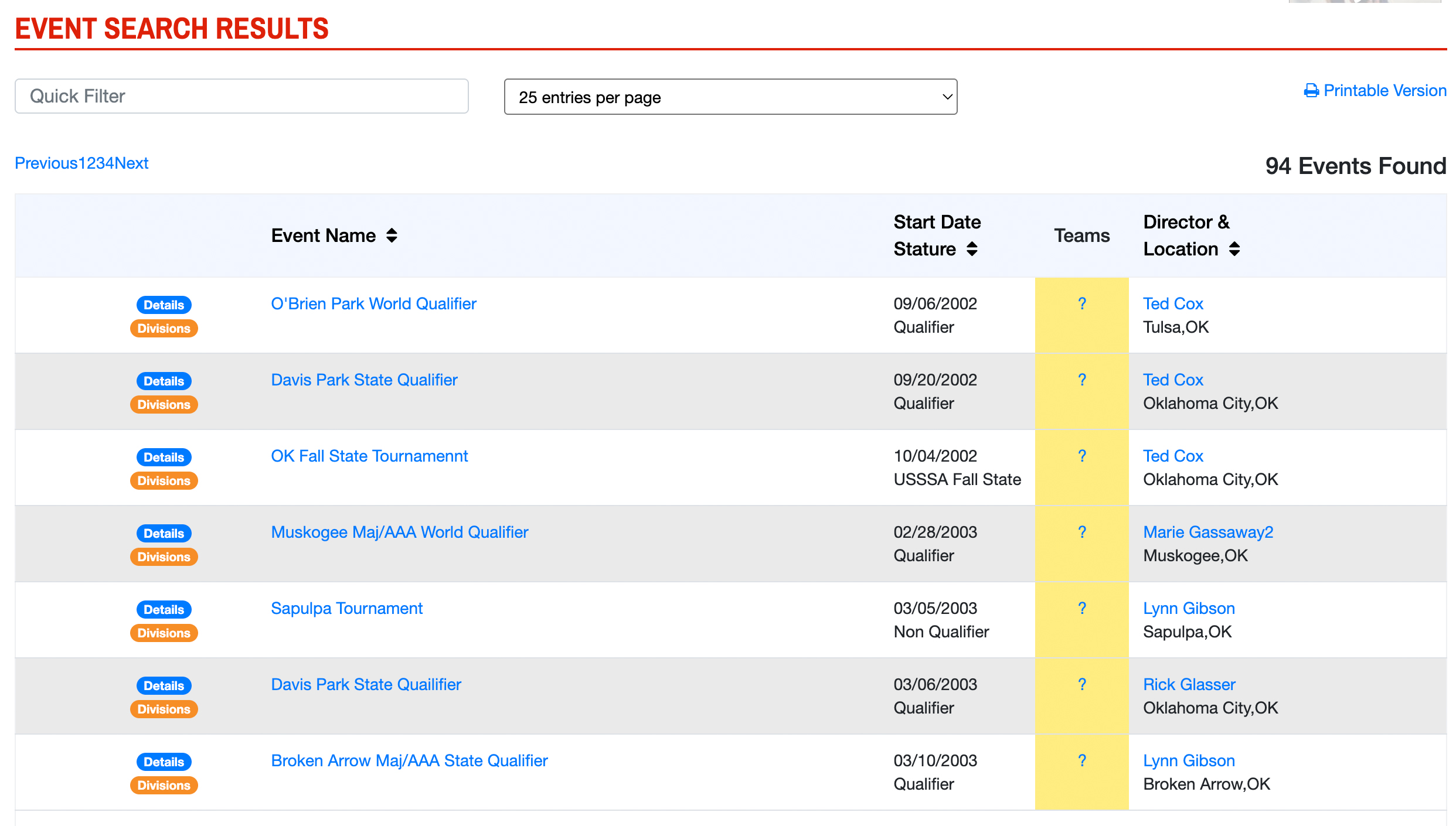
Some annual event-search rows show “?” in the Teams column, creating the appearance that participation is unknown. Opening the event can expose divisions, a linked “N/A” team field, or a “Who’s Coming” page that reveals team names, rankings, classes and managers even when the primary listing does not publish a number.

Annual Listing “?”Open EventDivision / N/A LinkWho’s ComingCount Named Teams
Event search results teams question mark
The “?” is a research prompt — not proof that no teams participated.
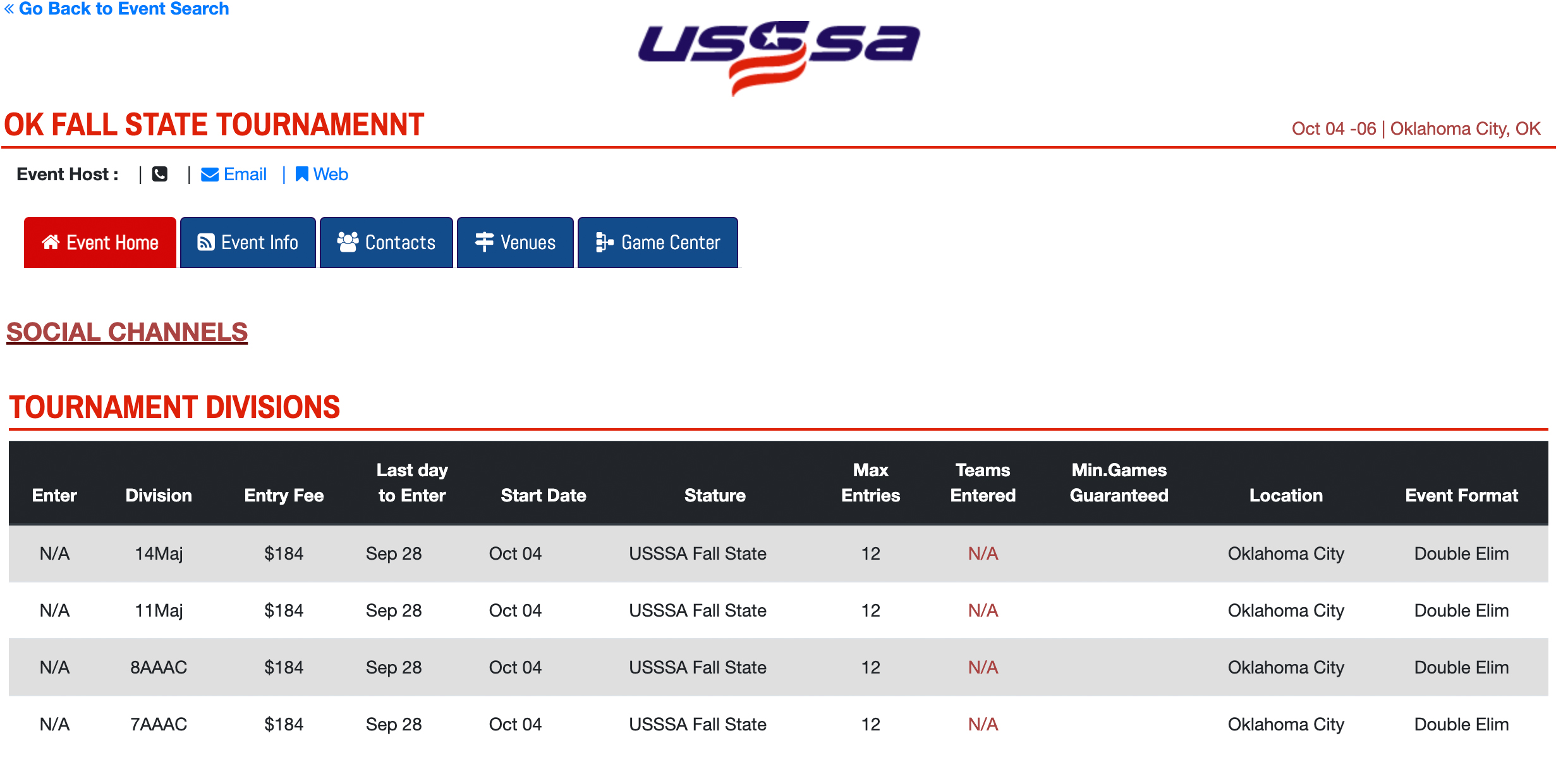
Teams entered N A on tournament divisions
The division page may show “N/A” rather than a visible count.
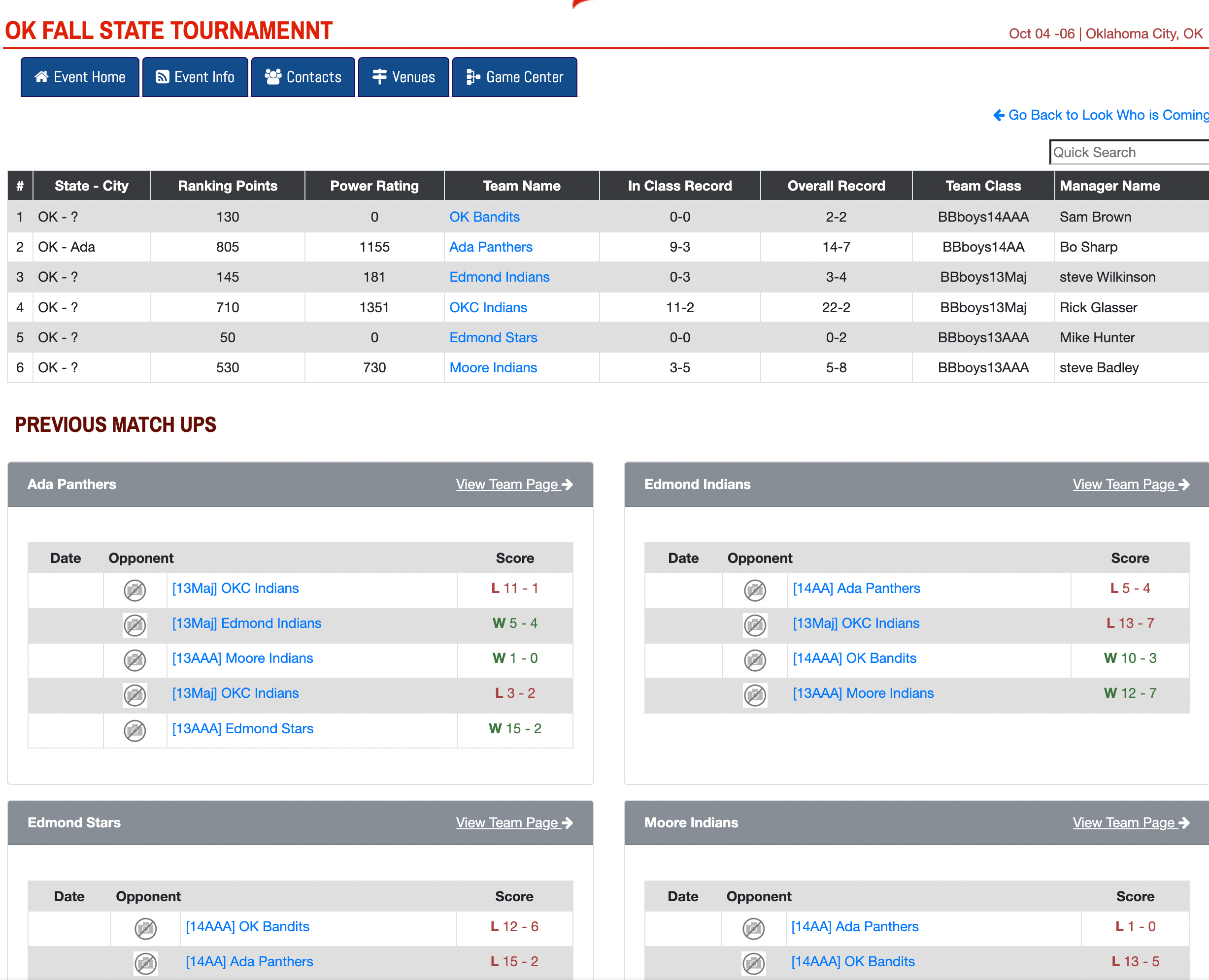
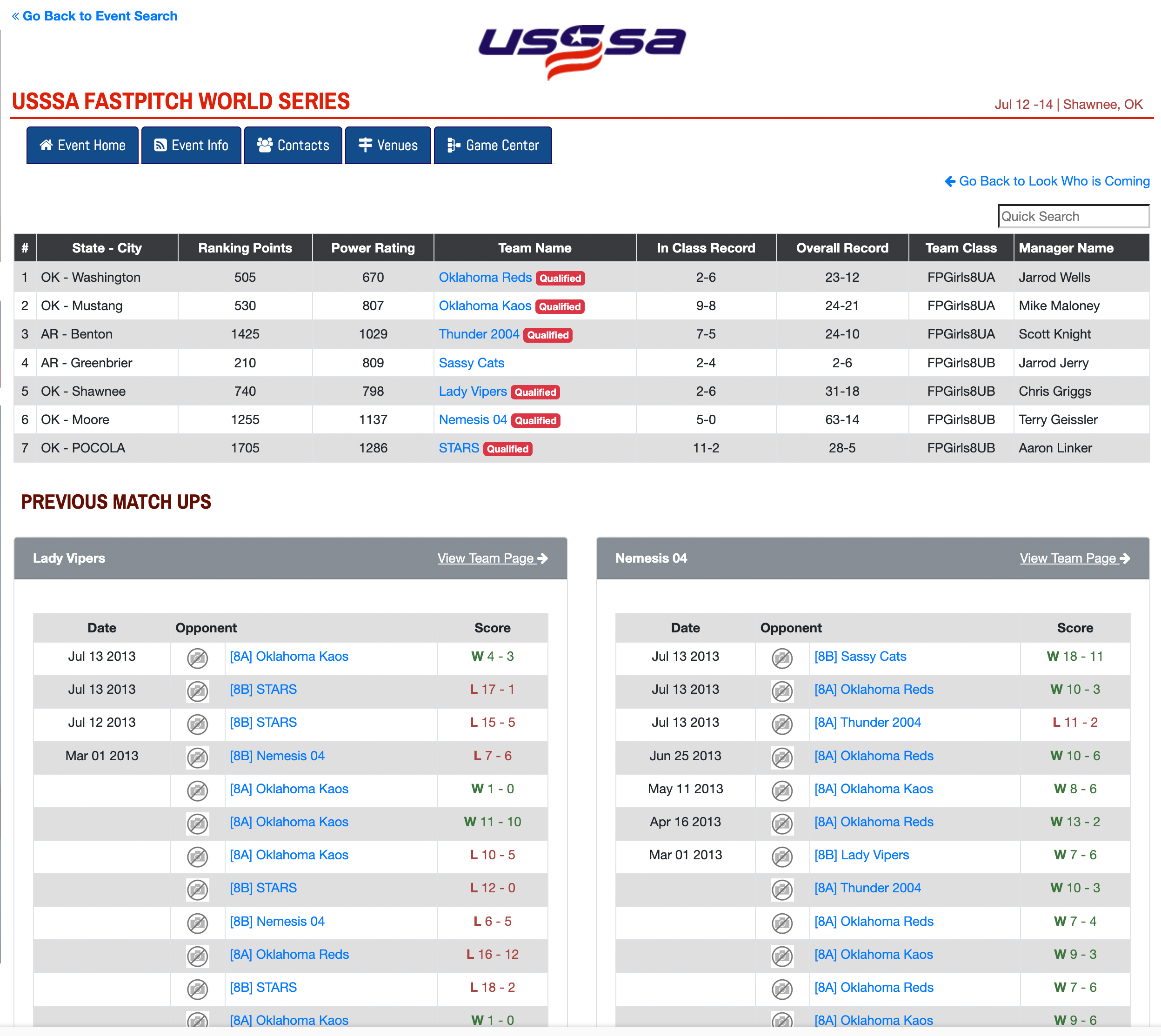
USSSA team names displayed
A deeper page can reveal the actual named teams.
Method03

Teams Entered = N/A — Results Withheld, Yet Game Center Can Reveal Teams

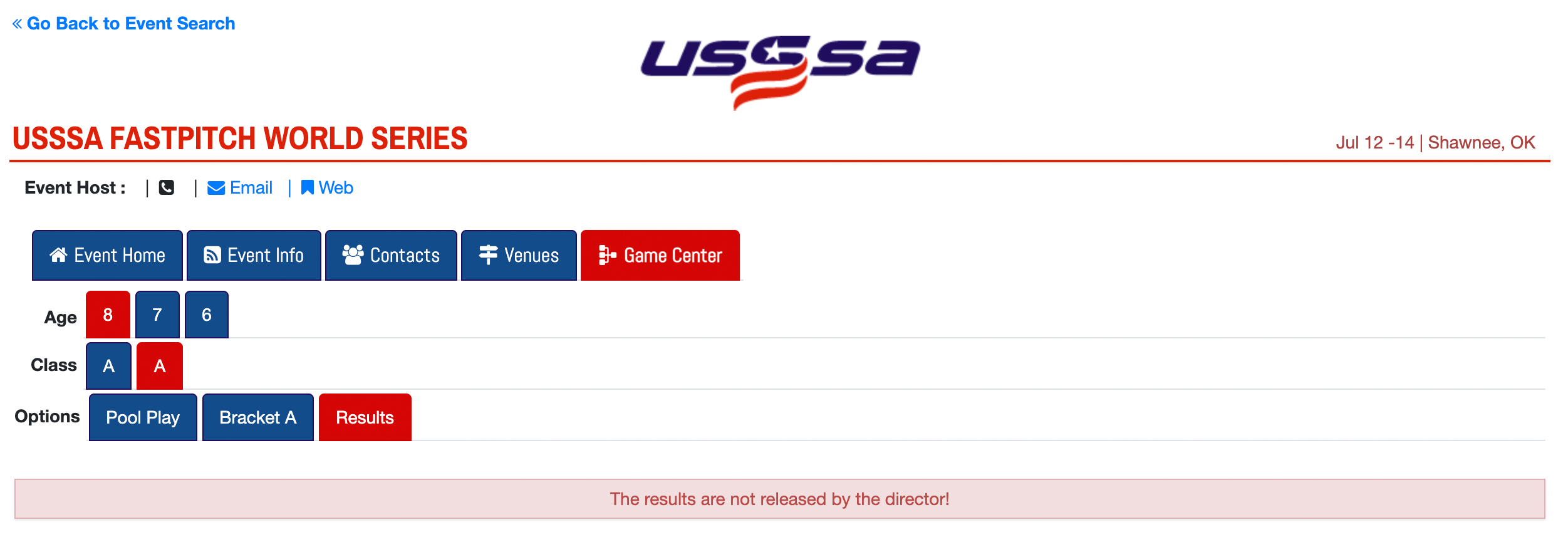
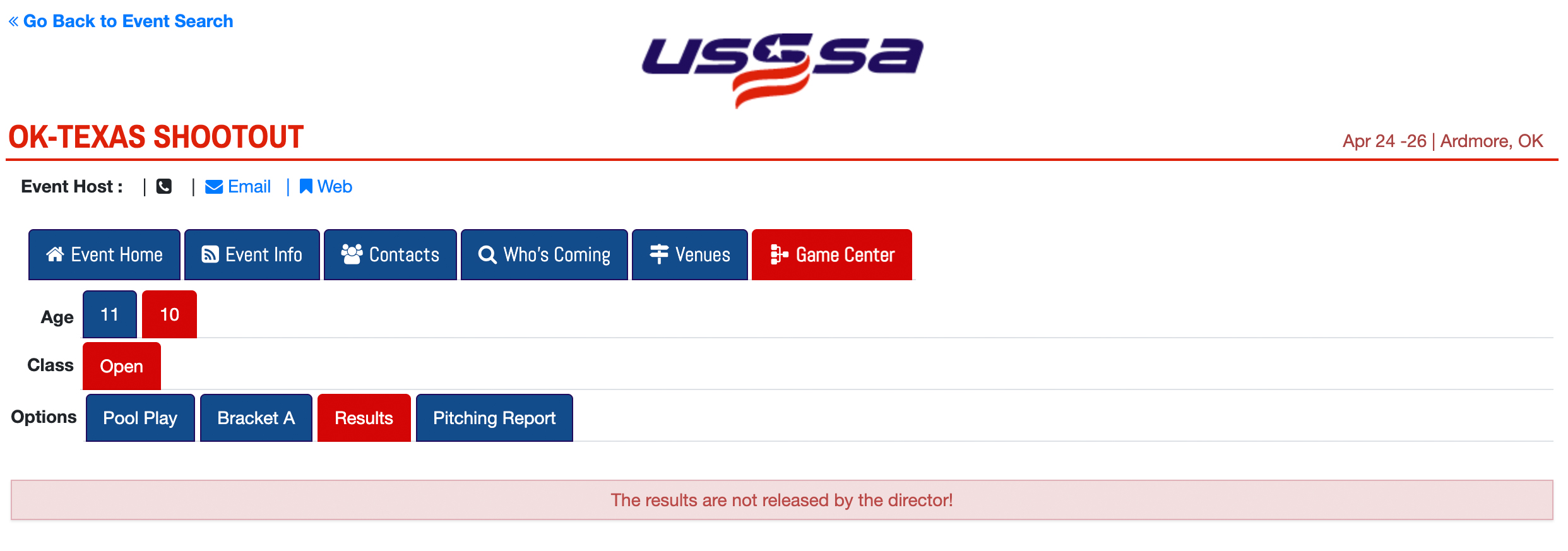
This newly emphasized onion layer begins with a division showing “N/A.” A public message may state that the director has chosen not to release results, but the event’s Game Center and Results navigation can still expose the participating teams in some cases. Hidden Valley now checks that deeper path before assigning a modeled team count.

Teams Entered N/AResults Not Released MessageGame CenterResultsTeams Revealed
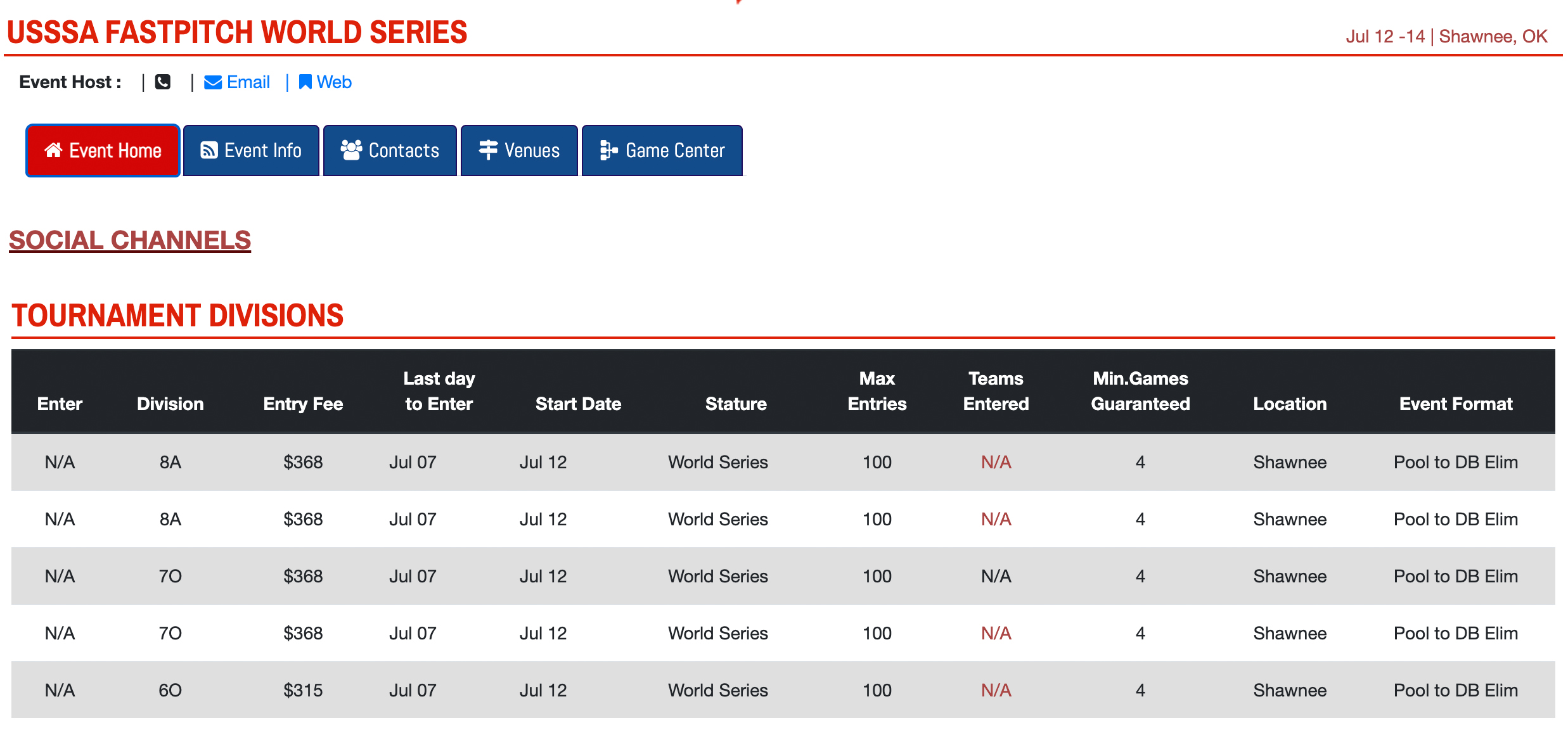
Teams entered N A division listing
N/A on the division table.
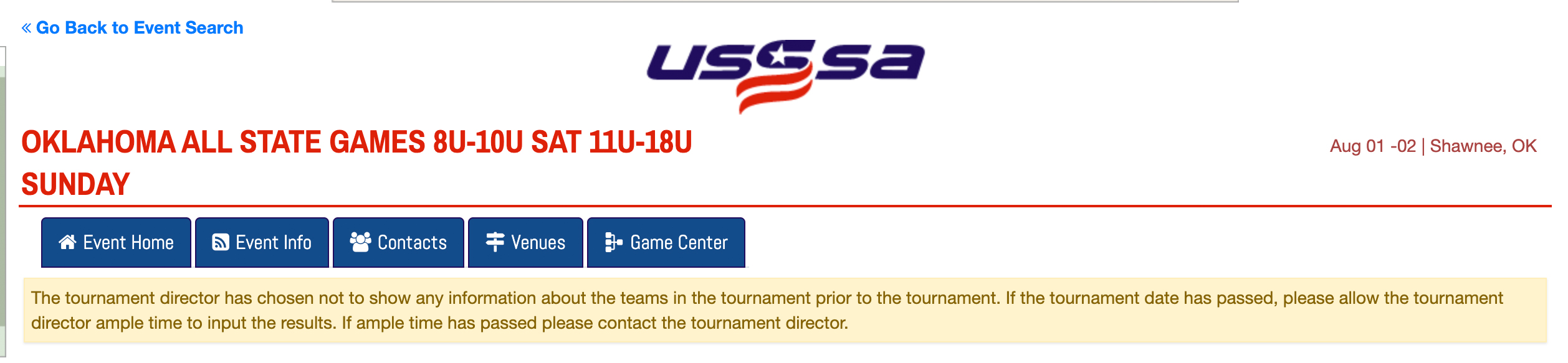
Director chose not to display team information
Public notice that team information was not displayed in the expected location.
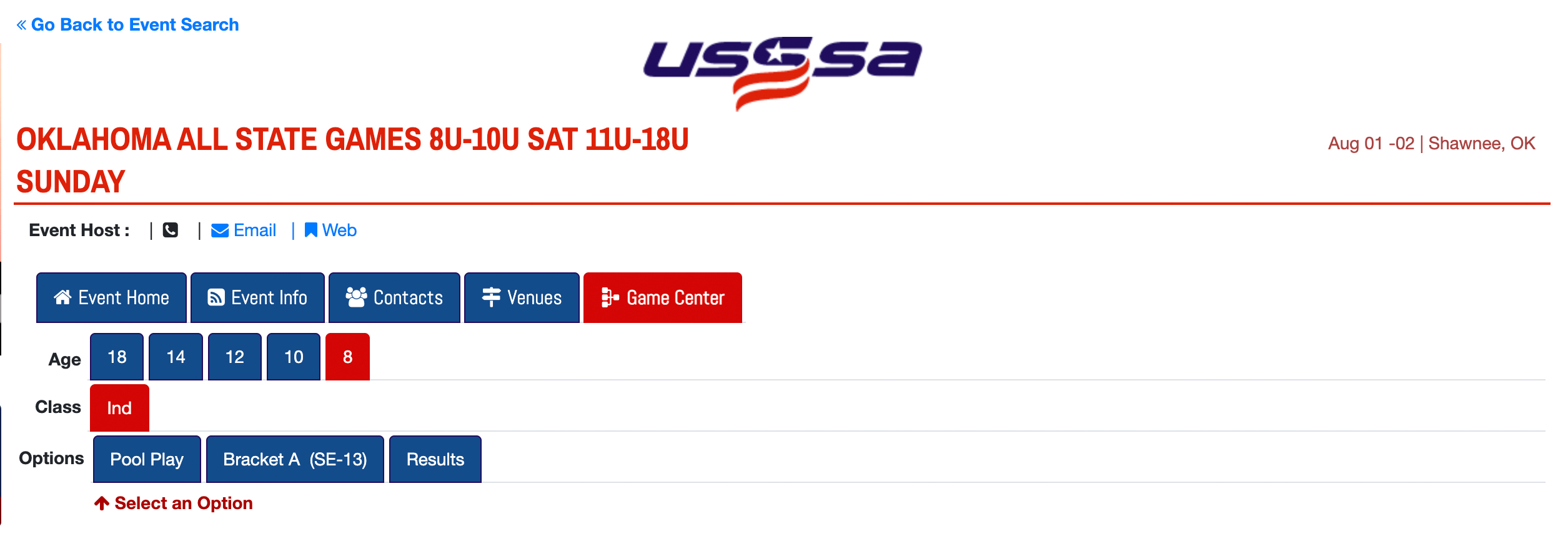
USSSA Game Center navigation
The Game Center becomes the next research layer.
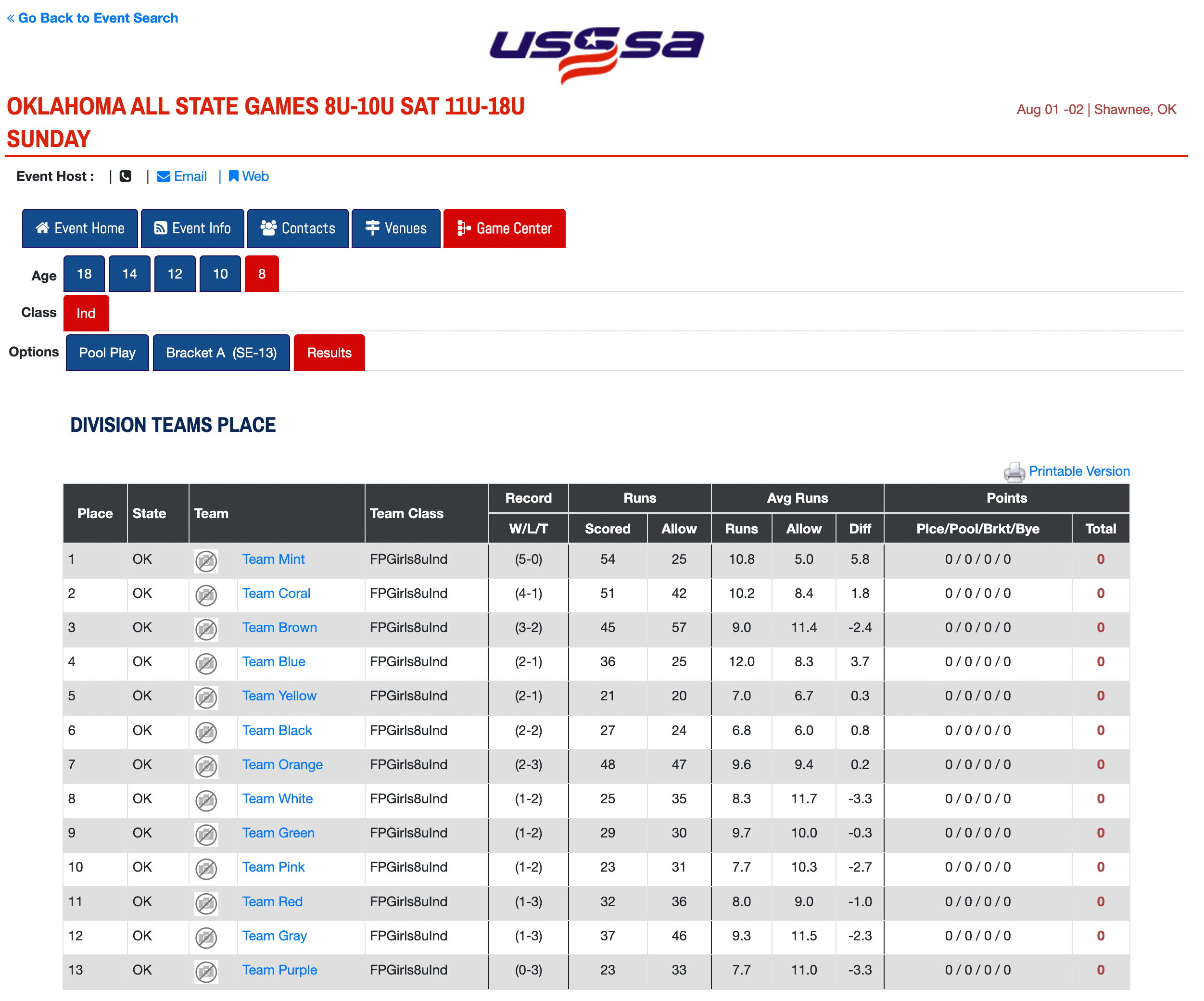
Game Center results team display
Results may reveal team names even after the prior screen says results are not released.
Method04

Red N/A vs Black N/A — The Hyperlink Itself Is Evidence

On some tournament-division tables, visually identical “N/A” values behave differently. A red “N/A” may be a live hyperlink while a black “N/A” is plain text. Following the linked version can reveal teams and pool-play information even when Game Center itself shows no published results. The URL structure is therefore part of the evidence chain.

Division TableRed Linked N/AFollow URLTeams / Pool PlayCross-check No-Result Screen
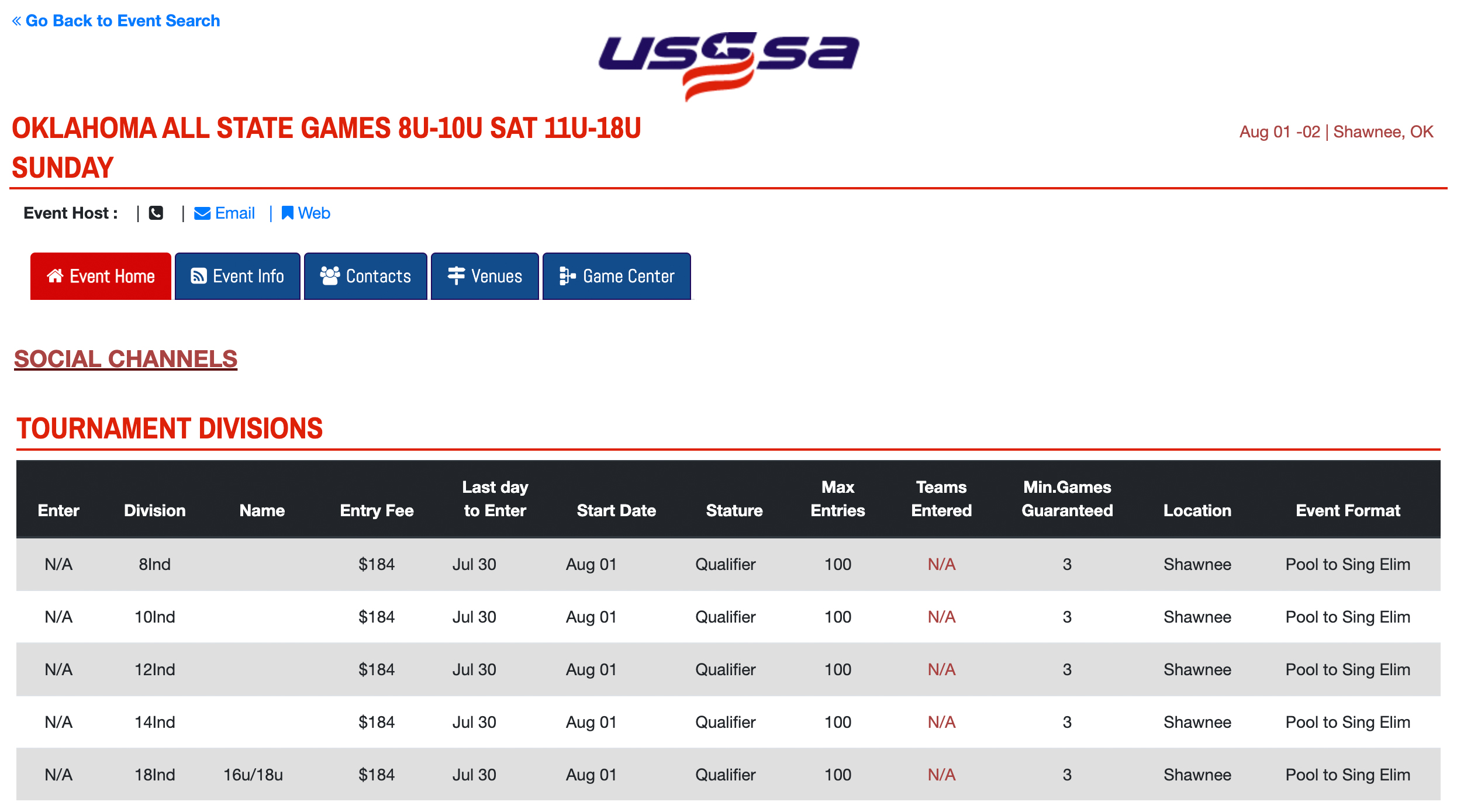
Teams entered N A values with and without URLs
Red linked N/A and black non-linked N/A can coexist on the same event page.
Linked N A reveals teams
Following the linked field reveals participating teams.
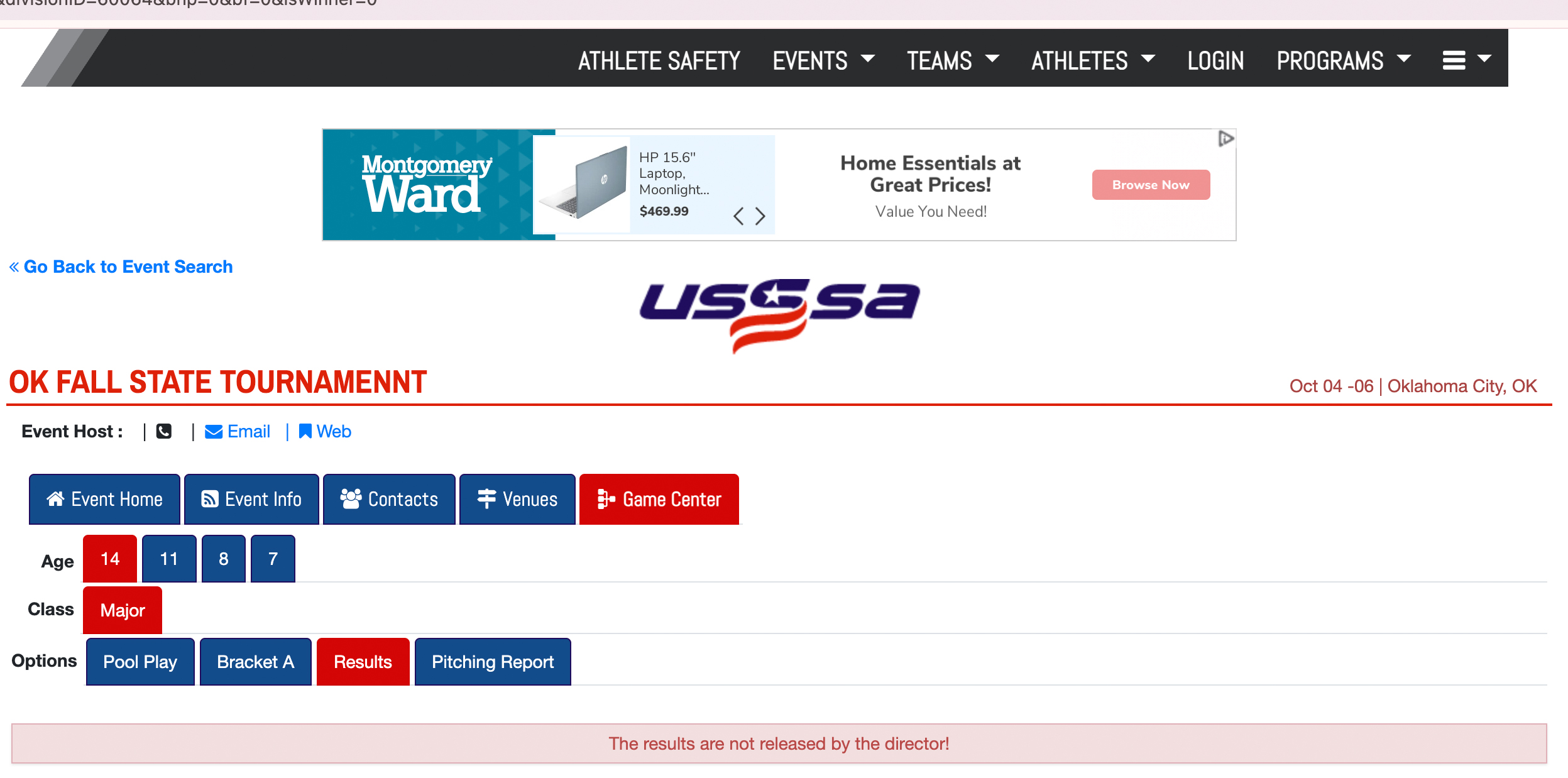
Game Center shows no results despite team link evidence
A separate result screen may still report no released results — demonstrating why one screen cannot be treated as the entire record.
Cross-checkGC

Game Center Main-Page Team Display

Where the Game Center exposes the teams directly, that team list becomes an additional factual cross-check against division counts, “Who’s Coming,” pool play or result pages.

Game CenterResults / Team DisplayCross-check Named Teams
Game Center results teams displayed on main page
Game Center Results — participating teams can be visible even when another part of the event record is incomplete.
Results not released by director notice
A no-results notice is recorded as a limitation, not automatically interpreted as a no-team event.
Team names table used for team count verification
Named-team displays provide the strongest public evidence for team-count replacement.
Factual core vs modeled layers

Why a Better Team Count Changes the Entire Research Model

The team count is a foundational input. When a deeper public page replaces a modeled estimate with named teams, related team-entry-fee and minimum-game calculations can be recalculated from a stronger factual base.

Current working research totals

0
Baseball Team Entry Fees
0
Softball Team Entry Fees
0
League Team Entry Fees
0
League Teams
Evidence hierarchy

Named teams, visible team counts, division records, pool play and Game Center records are treated as direct public evidence. Where those records cannot be recovered, the research clearly separates modeled assumptions from observed values.

How the team count flows downstream

Team Entry FeesObserved or recoverable team count × documented division/event entry fee.
Minimum GamesDerived from the event/division guarantee or the minimum observable game structure used by the dataset.
Umpire AssignmentsModeled from the minimum games and the research assignment structure.
GateProjected using the research baseline of $5 per adult across the 2001–2026 model.
ConcessionsProjected at one-half of the modeled gate statistic.
Economic ImpactModeled with day-trip families at $85 per day and overnight families at $289 per stay.
League FamiliesLeague participation model uses $25 per family.
0
Gate baseline per adult
0
Concession share of modeled gate
0
Day-trip economic-impact family rate
0
Overnight economic-impact family rate
0
League family projection
Current scope snapshot

The Updated Research Footprint

These are the current working values stated in the accompanying research transcript. They are displayed here as a snapshot of the methodology update, not as a claim that every field represents a final audited governmental or USSSA total.

0
Facilities
0
Directors
0
Municipality Entries
0
County-Field Entries
Includes combined/duplicated county-label structures; Oklahoma has 77 counties.
Methodology guardrails

What the Research Can — and Cannot — Say

Observed does not mean official accounting.

The team names, team counts, divisions, entry fees and game records shown on USSSA public pages are treated as public-source event evidence. They are not represented as audited USSSA financial statements.

Modeled values remain labeled as modeled.

Gate, concession, economic-impact, league-family and umpire-compensation layers are analytical projections unless supported by separate direct records. Their assumptions are displayed so the public can understand the calculation structure.

“N/A” and “?” are not silently converted to zero.

Hidden Valley now searches the deeper event architecture before deciding that a factual team count is unavailable. If named teams are recoverable, that evidence can replace a prior conservative estimate.

The dataset remains revisable when better evidence is found.

Discovering another public layer is a reason to correct the research, not preserve an older assumption. The methodology is designed to improve as the event record becomes more complete.