
Nearly three decades after an unexpected coaching assignment helped begin my own journey in youth sports, I found myself back on a recreational field—this time helping coach my grandson Cole in U6 soccer. Somewhere between rotating goalkeepers, missed assignments, Saturday snacks and six-year-olds simply learning how to play, I was reminded of something easy to lose along the way: why we coach children in the first place.
Why I Volunteered
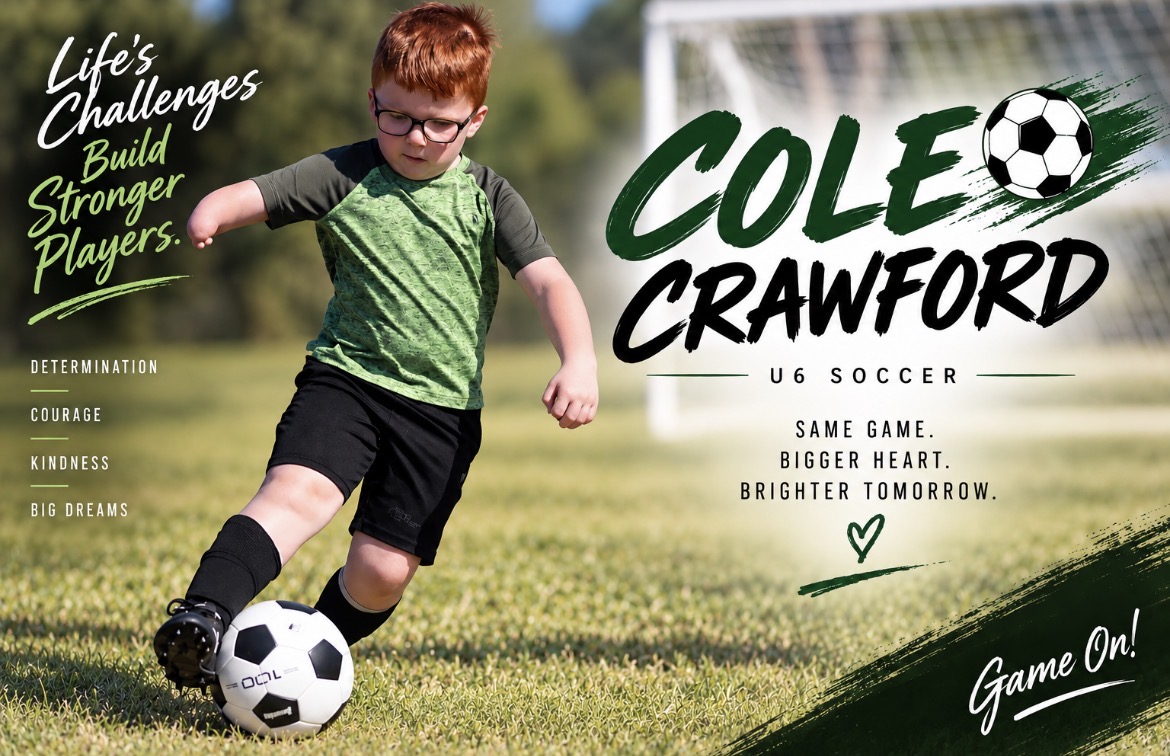
This season I volunteered to help coach U6 soccer through the YMCA for my youngest grandson, Cole. Cole was born without the lower portion of one arm and faces other physical challenges. I wanted him to have an opportunity to participate in recreational sports in an environment where the first question was not what he could not do, but what he could experience.
Soccer seemed like a good fit. He could run. He could be active. He could learn a game. More importantly, he could learn how to be part of a team.
Participation
A place for a young child to get on the field, move, play and discover the game.
Teamwork
Learning that sports are shared—teammates, coaches, responsibility and encouragement.
Sportsmanship
Learning how to compete, make mistakes, win, lose and come back the next week.
Those are simple ideas. But after spending so many years around competitive youth baseball, tournaments and the business surrounding youth sports, returning to that simplicity has been refreshing.
What Six-Year-Old Sports Are Supposed to Be
We were only a few weeks into the season when I recorded these thoughts. We had played two games. We won the first and were badly overmatched in the second.
And that was okay.
Our goalkeepers were still learning that after kicking the ball they could not simply follow the action down the field and leave the goal empty. Every child wanted a chance to play goalie. Children were learning positions, spacing and what they were supposed to do next.
That is what six-year-old recreational sports look like.
The mistakes are not interruptions to development. The mistakes are part of the development.
On our team, children rotate. Good players sit, too. Everybody gets an opportunity. That may not always create the lineup most likely to win a particular quarter or game, but winning every U6 soccer game is not why I believe a community recreational program exists.
There are competitive programs for families looking for more practices, more games and a more performance-oriented environment. Recreational sports can serve a different purpose: exercise, teammates, sportsmanship, learning and fun.
A Soccer Game Took Me Back to the 1990s
Watching these kids learn brought back a story from the beginning of my own coaching journey.
My middle son, Brad, had already played two years of T-ball. I believed another year of T-ball would do little for his development and that he was capable of playing seven- and eight-year-old machine pitch. The rules did not allow him to play up.
I made a decision I would not present today as the proper way to challenge a youth-sports rule: I listed him as a year older on his application.
People within Shawnee Youth Baseball knew what had happened. Brad played that season. Near the end of the year, the board called an emergency meeting concerning my actions as a parent. My recollection is that the meeting was recorded and that the board decided I could have nothing to do with Shawnee Youth Baseball for two years.
Historical-source note: This section reflects my first-person recollection as recorded on September 28, 2026. The original board recording and contemporaneous meeting record referenced in my recollection are not presently part of this page's source record.
At the time, the punishment struck me as unusual for another reason: I was not coaching. I was working in the fire service and pursuing paramedic training. With a 24-hours-on, 24-hours-off schedule, I did not believe I could make the commitment I expected a coach to make.
I had no plan to become a youth baseball coach.
Then They Needed a Coach.
The following season Brad was legitimately seven years old. Teams were practicing and the preseason tournament was approaching, but we had not received a call telling us what team he was on.
I drove to the ballfields to find out what was happening. I was told there was no coach for his team.
Then came the question that changed the direction of my involvement in youth sports:
Would I like to coach?
How the Shawnee Braves Began
I reminded them of the previous year's decision concerning me. My recollection of the response was essentially that if I agreed to coach, they could take care of that.
So I coached.
The team I inherited was not assembled as an all-star group. In my recollection, it was largely made up of children who remained after the draft process—kids who had not been selected onto the other teams.
That group became the Shawnee Braves.
Early on, we were not very good. I remember being run-ruled repeatedly in a preseason tournament, including games in which we were beaten by margins around 20–0.
But we practiced. We taught fundamentals. The kids learned the game.
By later in the season, teams that had overwhelmed us early were no longer running away from us. We became competitive with them. In some games, we had opportunities to beat them.
Looking back, the important part was not that we found better players. The players we already had became better.
That was coaching at its most basic: take the children who show up, teach them, give them opportunities, let them fail, help them improve and see where the season takes them.
When Recreation Became Competition
The Braves did not remain a simple recreational team forever. Over time, my involvement in youth baseball became much more competitive. Winning mattered more. Strategy mattered. Lineups mattered. Coaches thought about putting the strongest players in the positions that gave the team the best opportunity to win.
There is nothing inherently wrong with competition. Learning to compete is one of the lessons sports can teach. There is also a place for advanced and highly competitive programs when families knowingly choose that environment.
But competitive success and recreational development are not the same mission.
That distinction can become harder to see after years spent around tournaments, select teams and increasingly organized youth-sports systems. Coaching Cole has reminded me how different the view is from the beginning—before rankings, brackets and tournament results become the measure of a season.
Coming Full Circle With Cole
Now I am back on a field with six-year-olds.
I am an assistant coach. We practice once a week for about an hour and play on Saturdays. Kids rotate through positions. Everybody sits. Everybody plays. Sometimes the goalie forgets to stay near the goal. Sometimes the other team is simply better.
And after the game, win or lose, there are snacks.
That small tradition says more than it might seem to. The children competed. The game ended. They are still teammates. They are still six years old. Next week they get another opportunity.
For Cole, this is his first experience playing a team sport. His physical difference affects some things he can do, but it does not have to define whether he belongs on the field.
He needs what every young child deserves from community sports: an opportunity to run, learn, compete, make mistakes, be a teammate and discover what he is capable of doing.
From Brad to Cole
Brad needed a coach. I unexpectedly became one.
The Shawnee Braves taught me what could happen when children who were not initially selected or expected to succeed were given instruction, patience and an opportunity to develop.
Years of increasingly competitive baseball followed.
Now Cole has brought me back to the beginning.
Sometimes moving forward means remembering why you started.
About This Historical Reflection
This page is based primarily on a first-person audio reflection recorded by Kenneth R. Crawford on September 28, 2026, while helping coach his grandson Cole's U6 soccer team. The recording connects the 2026 soccer experience with Crawford's recollection of the beginning of his youth-baseball coaching experience in Shawnee in the late 1990s.
Statements concerning historical conversations, board actions, team formation and events from that period are presented as personal recollection unless independently supported by contemporaneous records. This distinction is intentional and consistent with Baseball Heaven's effort to separate firsthand testimony from documentary evidence.
Back to the Beginning
Youth sports can become complicated. Organizations grow. Competition increases. Tournaments multiply. Adults debate rules, facilities, money, governance and who gets to play where.
But on a Saturday morning with six-year-olds, the purpose can still be remarkably simple.
Give them a ball. Give them a team. Give them a coach willing to teach. Give them room to make mistakes.
Then let them play.
Same Game. Bigger Heart. Brighter Tomorrow.