Kenneth Crawford — Personal Story & Legacy of Brian Crawford

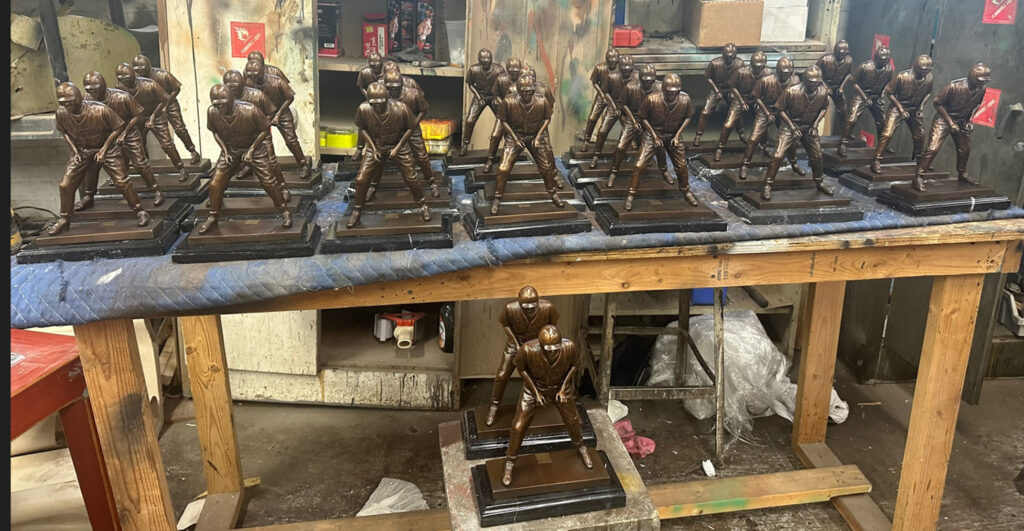
For more than twenty-five years, I have dedicated my life to youth development, integrity in sport, and public service. My journey began as a father, coach, and mentor, but it was profoundly shaped by the life and legacy of my son, Brian Crawford. Brian’s deep love for baseball and his constant reminder of Philippians 4:13 — “I can do all things through Christ which strengtheneth me” — became the anchor for both my faith and my mission. Brian’s passion for the game and his belief in teamwork inspired the creation of the Brian Crawford Memorial Sports Complex, a project designed to bring opportunity, safety, and transparency to youth athletics. That vision extended far beyond the fields — it became a movement for integrity and community renewal. As a retired Chief Officer from Tinker Air Force Base and later a state employee at Seminole State College, I applied the same discipline, accountability, and stewardship to public projects that I had learned in public service. When Brian passed away, my life’s work took on new meaning. His legacy pushed me to document the realities behind youth sports economics — the cash-based systems, the lack of oversight, and the imbalance between profit and purpose. Through my doctoral study, “Integrity of the Game vs Economic Impact (Politics): The Oklahoma Business Plan,” I built case studies and datasets to expose weaknesses in governance and to propose solutions rooted in honesty, transparency, and community ownership. Today, that same mission continues through my grandson Jackson, who plays youth baseball with the same joy and energy his uncle once had. Watching him step onto the field is a daily reminder that this fight for integrity is not academic — it is generational. My goal is to ensure that his experience, and the experiences of countless children across Oklahoma, are guided by systems of fairness, accountability, and compassion. The Brian Crawford Memorial Sports Complex stands not only as a tribute to Brian’s spirit but as a living example of how love, data, and service can transform a community. Every dataset I analyze, every record I preserve, and every reform I advocate is rooted in a father’s promise — that the integrity of the game will always matter more than the politics of profit. Through that promise, Brian’s legacy lives on.

Kenneth Crawford — Director of Strategic Data Analysis

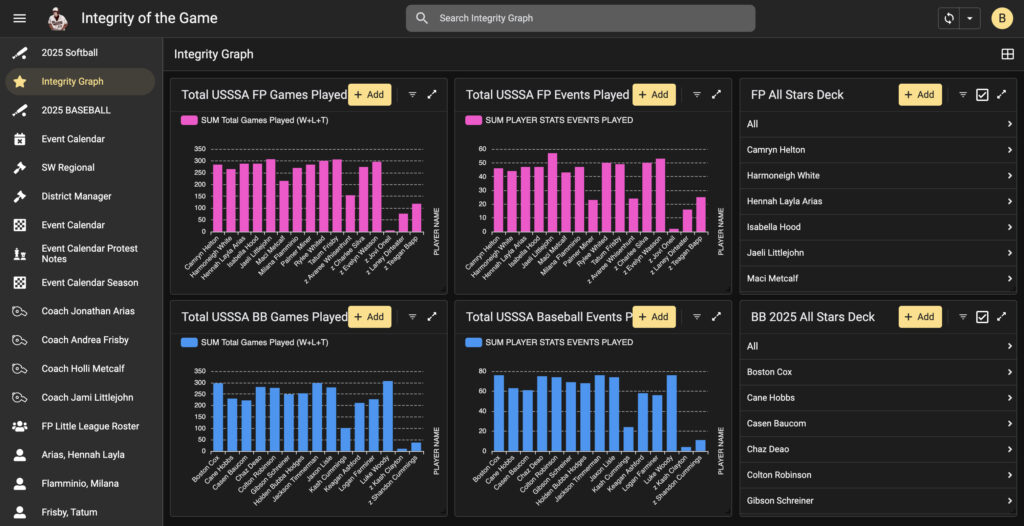
Integrity of the Game vs Economic Impact (Politics): The Oklahoma Business Plan

Overview

Over the past twenty-five years, Kenneth Crawford has conducted an independent, data-driven research initiative uniting three cornerstone investigations—Voter Registration Analytics, ShawneeMinutes Government Transparency Dataset, and the USSSA Financial Integrity Case Studies—under a single framework: accountability, transparency, and public trust in both government and youth sports economics.

1. Voter Registration Dataset: Civic Engagement as a Baseline for Reform

Purpose: Quantify and visualize citizen participation across Pottawatomie County and Oklahoma’s 5th Congressional District, identifying where civic disengagement enables institutional opacity.

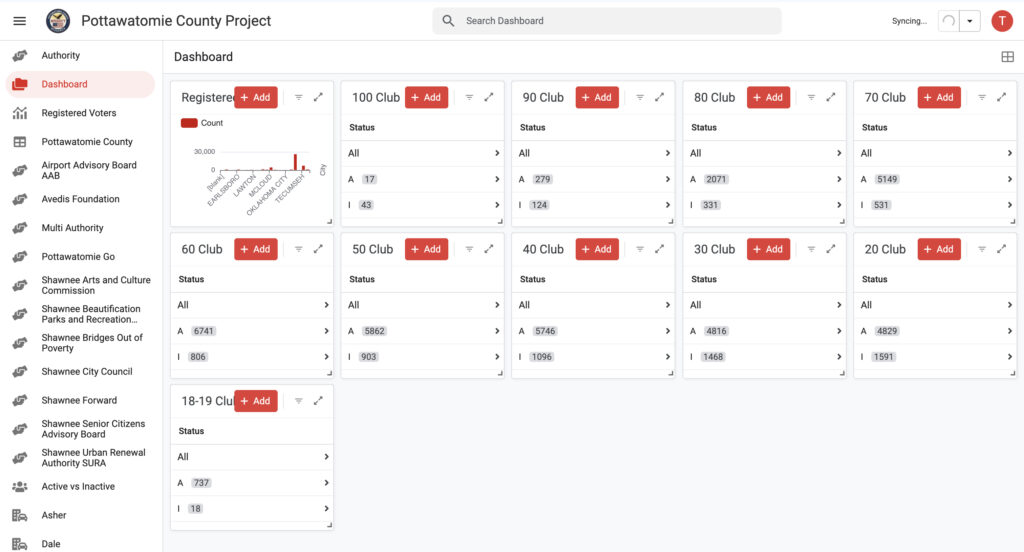
Methods: Built a Google Sheets/Looker Studio dashboard integrating raw Election Board data, calculating participation rates and age distribution, and mapping precinct-level engagement.

Findings: Correlation between low voter participation and lack of representation on appointed city/county boards; data now used to model voter turnout and reform strategies.

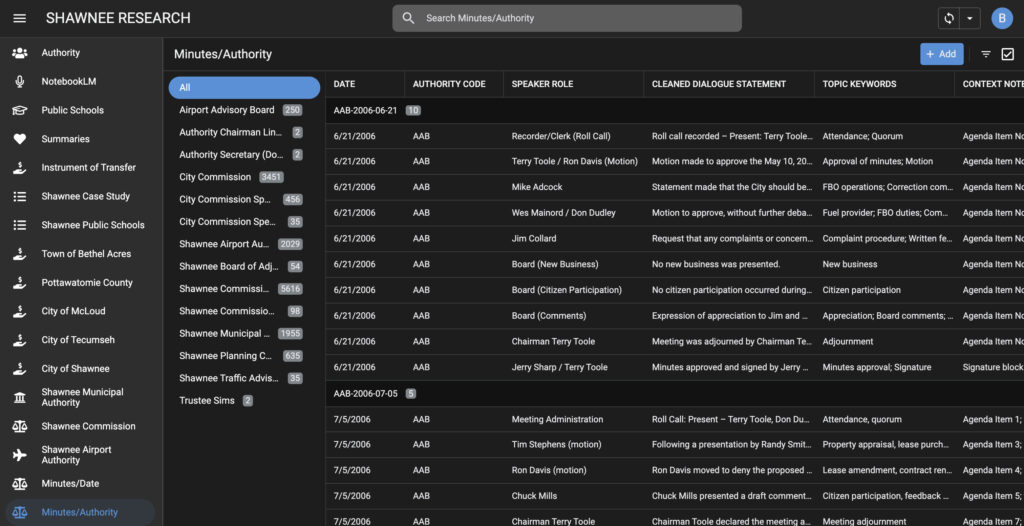
2. ShawneeMinutes Dataset: Reconstructing Local Governance History

Purpose: Create a searchable record of Shawnee city decisions (1998–present) tied to unresolved economic, land-use, and legal issues.

Methods: Digitized City Commission minutes, Airport Advisory Board records, and Municipal Authority documents into a chronological accountability ledger.

Findings: Exposed expired board terms, non-resident appointees, and missing public records; linked historical votes to unfulfilled promises for a regional sports complex.

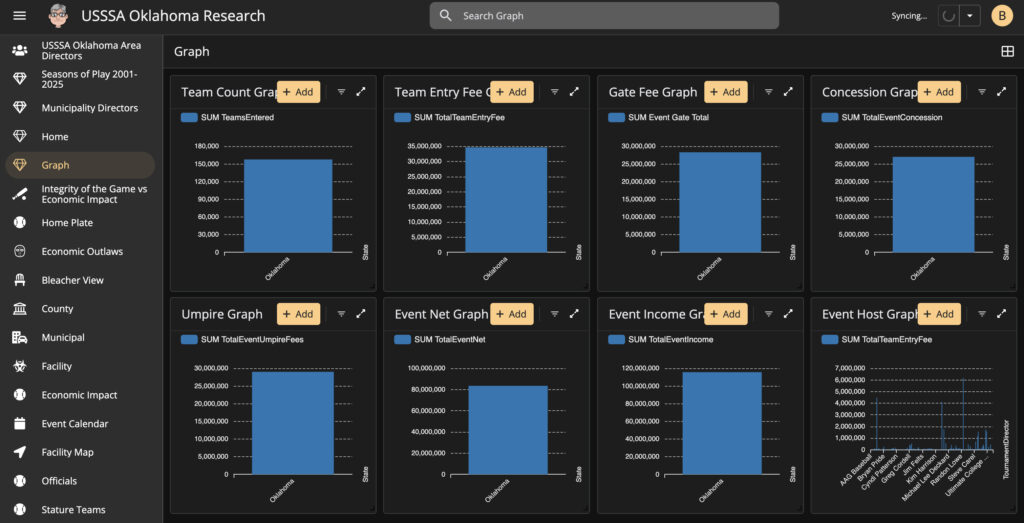
3. USSSA Case Studies: Following the Money in Youth Sports

Purpose: Document economic and governance structures behind youth baseball and softball, revealing how nonprofit and private entities blur accountability.

Methods: Created Hidden Valley Dataset (2001–2025) reconstructing USSSA tournaments, directors, and facility revenues; compared with AIUSSSA and Red Dirt Valley datasets.

Findings: Millions in team entry fees and gate revenues bypassed municipal oversight; revealed lack of audits on public fields used for private profit; linked Oklahoma data to the Florida USSSA RICO settlement.

Integration: How the Case Studies Fit Together

Voter Registration — identifies democratic deficits enabling opaque governance.

ShawneeMinutes — documents pathways of authority and historical accountability gaps.

USSSA Case Studies — exposes monetary leakage from public benefit to private gain.

Together, they form a unified model: where civic disengagement and weak transparency converge, economic exploitation thrives.

Strategic Role: Director of Strategic Data Analysis

As Director, Kenneth Crawford serves as architect and analyst—curating public datasets, integrating civic and economic data, and translating evidence into actionable reform for stakeholders. His ethical leadership champions transparency and the integrity of youth development systems.

Conclusion

Integrity of the Game vs Economic Impact (Politics) transcends academia—it is a public service initiative and data-based reform model that strengthens democracy, restores trust, and demonstrates that Oklahoma’s greatest economic asset is integrity itself—when data, democracy, and development operate in full view of the people they serve.